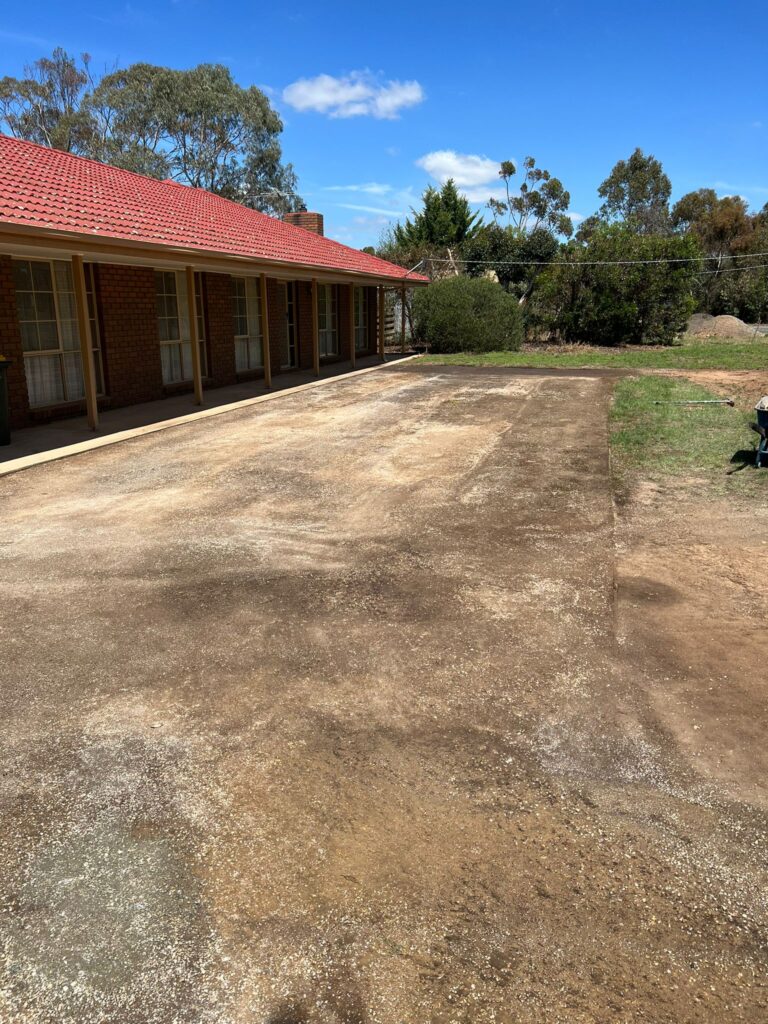
Uneven asphalt does not automatically mean an entire driveway, parking area or access road needs to be rebuilt. In many cases, the problem may be confined to particular sections, while much of the existing pavement remains structurally sound. Localised repairs, correction of failed areas or asphalt resurfacing may therefore be possible without removing the complete pavement.
The appropriate solution depends on why the asphalt has become uneven. A shallow depression caused by localised settlement is very different from widespread deformation resulting from an unstable pavement base.
For property owners and businesses in Parkes, NSW, a professional assessment can determine how far the deterioration extends and whether serviceable pavement can be retained. The aim should be to correct the cause of the unevenness rather than simply making the surface appear level again.
Why Does Asphalt Become Uneven?
Asphalt relies on the pavement structure underneath it for support. When part of that structure settles, moves or deteriorates, the asphalt surface can follow that movement.
Uneven pavement can also develop through repeated traffic loading and gradual wear.
Common causes include:
- Localised settlement
- Inadequate pavement support
- Poor compaction
- Water penetration
- Drainage problems
- Repeated heavy vehicle loading
- Wheel rutting
- Failed previous repairs
- Deterioration around pavement edges
Identifying which of these conditions is responsible is the first step towards determining whether localised correction is practical.
Not All Uneven Asphalt Is Structural Failure
An uneven surface can look serious without necessarily indicating failure throughout the entire pavement.
For example, one isolated section may have settled because the supporting material underneath has weakened. The pavement surrounding that section may still be stable.
Similarly, a frequently travelled wheel path may develop rutting while less heavily used sections remain in reasonable condition.
This is why the extent of the problem matters.
If deterioration is genuinely localised, removing otherwise sound pavement may be unnecessary. The affected section can instead be assessed independently and repaired appropriately.
Localised Depressions May Be Repairable
A depression is an area where the pavement has sunk below the surrounding surface.
Small depressions deserve attention because they can create secondary problems. Rainfall may begin collecting in the low area, increasing the amount of moisture affecting cracks or other weaknesses.
The appropriate repair depends on what caused the depression.
If the issue is confined to a small section, the affected pavement may be removed, the underlying materials corrected and the surface reinstated.
If the depression is part of widespread settlement, a broader solution may be required.
Simply placing material over the low point without understanding why it sank can leave the underlying movement unresolved.
Rutting Needs to Be Assessed Carefully
Rutting appears as longitudinal depressions within frequently travelled wheel paths.
It can develop for different reasons.
In some cases, deformation may be primarily associated with the asphalt surface. In others, the entire pavement structure may be moving under repeated loads.
Professional assessment should therefore consider:
- Rut depth
- Traffic patterns
- Condition of surrounding asphalt
- Cracking around the ruts
- Pavement movement
- Condition of the supporting layers
- Whether water collects within the wheel paths
Where rutting is relatively localised, targeted pavement repairs may be possible. More extensive structural rutting can require deeper rehabilitation.
Water Can Be Responsible for One Uneven Section
Drainage problems are an important cause of localised pavement deterioration.
A section that regularly receives or retains rainfall may deteriorate faster than surrounding asphalt.
Once water enters through cracks or damaged edges, supporting pavement materials can weaken. Repeated traffic loads then cause movement, resulting in settlement, cracking or pothole formation.
Signs that water may be contributing to unevenness include:
- Standing water
- Cracking around a depression
- Soft pavement edges
- Potholes forming in the same section
- Settlement concentrated in a low area
- Deterioration following the path of runoff
Where drainage contributes to the problem, it should be considered as part of the repair.
Correcting the asphalt without addressing continuing water problems may allow the same section to deteriorate again.
Failed Patches Can Create an Uneven Surface
Older asphalt frequently contains repairs completed at different times.
A well-prepared patch can remain stable, but an unsuccessful or deteriorating repair may begin to sink, crack or separate from the surrounding pavement.
Over time, multiple failed patches can create an increasingly uneven driving surface.
Existing repairs should be checked for:
- Settlement
- Cracking around the edges
- Loose material
- Movement
- Potholes developing beside them
- Differences in level
If only individual patches are failing, those areas may be repaired without rebuilding the complete pavement.
Localised Repairs Can Preserve Sound Pavement
Where the underlying problem is confined to a particular area, localised repair can be an effective approach.
This generally involves identifying the limits of the failed pavement rather than automatically treating the entire site.
Depending on the condition, work may involve:
- Removing unsuitable asphalt.
- Excavating unstable material where required.
- Correcting the supporting pavement.
- Recompacting suitable pavement materials.
- Reinstating the asphalt surface.
- Matching the repaired section with surrounding pavement levels.
The purpose is to rebuild the failed area while retaining pavement that is still performing properly.
Resurfacing May Correct Broader Surface Irregularities
When unevenness is distributed across a larger area but the underlying pavement remains sufficiently stable, asphalt resurfacing may be worth considering.
Resurfacing renews the wearing surface while retaining suitable existing pavement underneath.
It can help restore a more consistent surface where there is:
- General surface wear
- Numerous previous patches
- Minor variations in pavement level
- Widespread ageing
- Surface deterioration across multiple sections
However, significant depressions, failed patches and unstable areas should be repaired before resurfacing.
A new asphalt layer should not simply be used to conceal active pavement movement.
Preparation Is Essential Before Resurfacing
The quality of resurfacing depends heavily on the pavement underneath.
If a surface contains low sections, potholes, failed patches or unstable pavement, those defects need to be assessed before new asphalt is installed.
Preparation may include:
- Inspecting pavement levels
- Identifying unstable sections
- Repairing failed patches
- Correcting significant depressions
- Treating suitable cracks
- Assessing drainage
- Preparing the existing surface
- Establishing an appropriate profile
This creates more consistent support for the resurfacing layer.
Why Simply Filling Low Areas May Not Work
Adding asphalt to a depression can make the pavement appear level again, but appearance alone does not indicate that the problem has been resolved.
If the supporting pavement underneath continues settling, the repaired section may sink again.
Cracking can then develop around the repair, allowing water into the pavement and accelerating deterioration.
This is particularly important when a low section has already been repaired more than once.
Repeated settlement suggests that the underlying cause should be investigated rather than simply applying another surface-level correction.
Cracks Around Uneven Areas Provide Useful Clues
Crack patterns can help reveal why asphalt has become uneven.
For example, cracking around the perimeter of a depression can indicate localised movement. Interconnected cracking across a broader area can point towards more extensive pavement deterioration.
Cracks associated with uneven pavement deserve particular attention when they are accompanied by:
- Rutting
- Settlement
- Soft sections
- Potholes
- Failed patches
- Water accumulation
These combinations can indicate that the problem extends deeper than the visible asphalt.
The Pavement Base Determines What Can Be Saved
One of the most important factors is the condition of the pavement base.
If the base remains stable across most of the site, there may be no reason to reconstruct the complete area simply because isolated sections have become uneven.
Where the base has failed extensively, however, retaining the existing pavement becomes more difficult.
Signs of widespread structural problems can include:
- Severe deformation
- Deep rutting across large areas
- Numerous soft sections
- Extensive settlement
- Widespread interconnected cracking
- Repeated pothole formation
- Continuing failure of previous repairs
These conditions can indicate that more substantial rehabilitation is required.
Traffic Patterns Can Explain Uneven Deterioration
Traffic does not affect every part of a pavement equally.
Entrances, turning points, parking positions and frequently travelled wheel paths can receive significantly more loading than other sections.
Heavier vehicles can increase these demands further.
If unevenness is concentrated in these areas, the repair should consider how the pavement is being used rather than treating the defect as an isolated surface problem.
The restored section needs to be suitable for the traffic it will continue carrying.
Pavement Edges May Need Additional Support
Unevenness can also develop near pavement edges.
Edges can have less lateral support than the central portion of an asphalt surface. If vehicles regularly travel close to a weak edge, cracking and settlement may gradually develop.
Water entering through damaged boundaries can worsen the problem.
Where edge deterioration is localised, repair may involve correcting the affected pavement and improving support rather than rebuilding the entire asphalt area.
When Is Localised Repair Likely to Be Suitable?
A targeted repair may be appropriate when:
- Unevenness is limited to one or several small sections
- Surrounding pavement remains stable
- Major structural cracking is absent
- Failed material can be clearly identified
- The supporting pavement can be repaired locally
- Drainage issues can be corrected
- Most of the existing asphalt remains serviceable
A professional assessment helps establish where the failed pavement ends and sound pavement begins.
When Is Resurfacing Worth Considering?
Resurfacing may be more appropriate when the pavement has numerous irregularities and general surface deterioration but remains structurally suitable overall.
Possible indicators include:
- Multiple old repairs
- Widespread surface wear
- Minor unevenness across larger areas
- Increasing cracking
- An inconsistent pavement texture
- Numerous localised defects
After unstable areas have been corrected, resurfacing can create a more consistent wearing surface across the broader pavement.
When Might Rebuilding Be Necessary?
There are situations where local repairs or resurfacing will not adequately address the problem.
Reconstruction may need to be considered when deterioration extends through substantial portions of the pavement structure.
This can include:
- Widespread base instability
- Severe settlement
- Deep structural rutting
- Extensive soft areas
- Major pavement deformation
- Continual failure following previous repairs
In these circumstances, retaining unstable pavement underneath a renewed surface can allow the same problems to return.
The decision should be based on pavement condition rather than assuming every uneven surface needs rebuilding.
Early Assessment Can Preserve More of the Existing Surface
Uneven asphalt often becomes progressively worse if the cause remains active.
A small depression can begin collecting water. Cracks may develop around it, and traffic can gradually increase movement in the weakened section. Eventually, a relatively localised defect can become a larger pavement failure.
Having the surface assessed earlier can make it easier to determine whether targeted repairs can preserve the surrounding pavement.
This is particularly useful where most of the asphalt remains in good condition.
Why Professional Assessment Matters
Correcting uneven asphalt successfully requires more than identifying where the surface is high or low.
An experienced asphalt contractor can assess:
- Pavement levels
- Settlement
- Rutting
- Crack patterns
- Previous repairs
- Drainage
- Edge condition
- Traffic movements
- Pavement stability
This information helps distinguish a localised surface defect from a deeper structural problem.
The result is a repair strategy based on why the pavement has become uneven rather than simply attempting to make the visible surface look level.
Conclusion
Uneven asphalt can often be corrected without rebuilding the entire area, particularly when the problem is confined to individual sections and the surrounding pavement remains structurally sound. Localised repairs can address failed areas, while resurfacing may provide a broader solution where surface deterioration has become more widespread.
The key is identifying why the pavement has become uneven. Settlement, drainage problems, failed patches, rutting and weak supporting materials require different approaches. Simply covering a low area without addressing its cause may allow the unevenness to return.
For property owners and businesses in Parkes, NSW, Parkes Road Tek provides professional asphalt assessment, repairs and resurfacing based on the condition of the existing pavement. If your asphalt has become uneven, contact our team to determine whether targeted repairs or resurfacing can restore the surface without unnecessarily rebuilding serviceable areas.
Call us on: 02 5839 3400
Click here to find out more about Parkes Road Tek
Click here to complete our contact form and see how we can help with your Asphalt and Bitumen Surfacing needs.