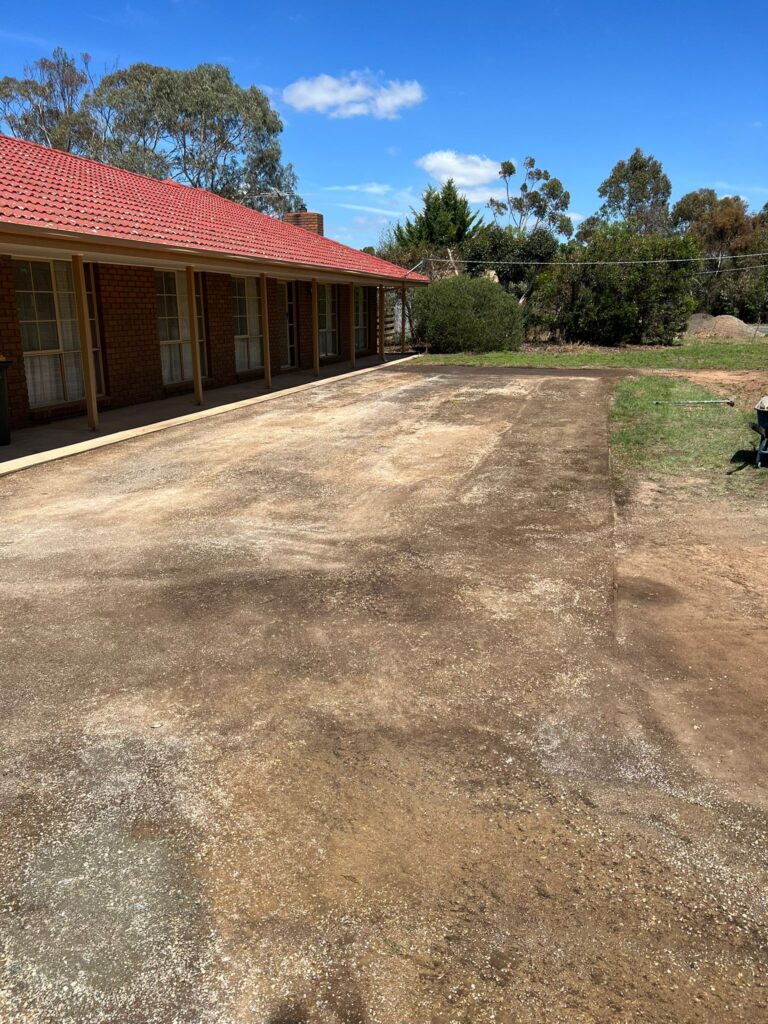
Hardstand areas play a critical role in supporting heavy vehicles, equipment and day-to-day operations. Whether used for agricultural storage, commercial yards or industrial purposes, these surfaces are designed to handle significant loads over long periods.
However, even well-constructed asphalt and bitumen hardstands eventually reach a point where repairs are no longer sufficient. For property owners in Parkes, NSW, recognising when reconstruction is necessary can prevent ongoing issues and protect operational efficiency.
At Parkes Road Tek, we regularly assess hardstand surfaces to determine whether maintenance, resurfacing or full reconstruction is the most appropriate solution.
Understanding the Difference Between Repair and Reconstruction
Minor cracking, surface wear or isolated damage can often be addressed through patching, crack sealing or resurfacing. These solutions are effective when the base structure remains sound.
Reconstruction becomes necessary when the structural layers beneath the surface have failed. If the foundation is compromised, surface-level fixes will only provide short-term improvement.
Signs That Reconstruction May Be Required
Several indicators suggest a hardstand in Parkes may need more than routine maintenance:
Widespread Cracking and Alligator Cracking
When cracking forms interconnected patterns across large sections of the surface, it often indicates structural fatigue in the base layers.
Persistent Rutting and Depressions
Heavy vehicle traffic can create wheel ruts. If these depressions return after patching, the underlying support structure may be failing.
Ongoing Water Pooling
Poor drainage or subsurface movement can cause repeated pooling. If water consistently collects in the same areas, it may signal base instability.
Frequent Repairs in the Same Areas
If a hardstand requires ongoing patching in identical sections, it usually points to deeper structural issues rather than surface defects.
The Impact of Heavy Use in Parkes, NSW
Hardstands in Parkes are often subjected to demanding conditions, including heavy transport vehicles, machinery and agricultural equipment. Over time, repeated loading stresses both the asphalt surface and the compacted base underneath.
When the base loses strength, the surface cannot distribute loads evenly. This leads to cracking, deformation and accelerated deterioration.
Reconstruction restores the structural integrity of the hardstand by rebuilding the foundation layers and installing a new asphalt or bitumen surface designed for current load requirements.
Why Timely Reconstruction Matters
Delaying reconstruction can result in:
- Increased safety risks for vehicles and operators
- Escalating surface damage
- Disruption to daily operations
- Reduced lifespan of temporary repairs
Addressing structural failure at the right time ensures the new hardstand performs reliably for years to come.
Professional Assessment Is Essential
Determining whether a hardstand requires reconstruction involves more than visual inspection. A professional assessment evaluates:
- Base condition and compaction
- Drainage performance
- Load demands
- Extent of structural fatigue
At Parkes Road Tek, we assess hardstand surfaces across Parkes, NSW to provide clear, practical recommendations based on long-term performance rather than short-term fixes.
Conclusion
A hardstand should be reconstructed when structural failure beneath the surface prevents effective long-term repairs. Widespread cracking, recurring rutting and persistent drainage issues are all strong indicators that rebuilding may be the most reliable solution.
For property owners in Parkes, NSW, acting at the right time protects both operational efficiency and long-term infrastructure value.
If you suspect your hardstand may require more than routine maintenance, contact Parkes Road Tek for a professional evaluation tailored to your site conditions.
Call us on: 02 5839 3400
Click here to find out more about Parkes Road Tek
Click here to complete our contact form and see how we can help with your Asphalt and Bitumen Surfacing needs.